Leather Jacket Mens
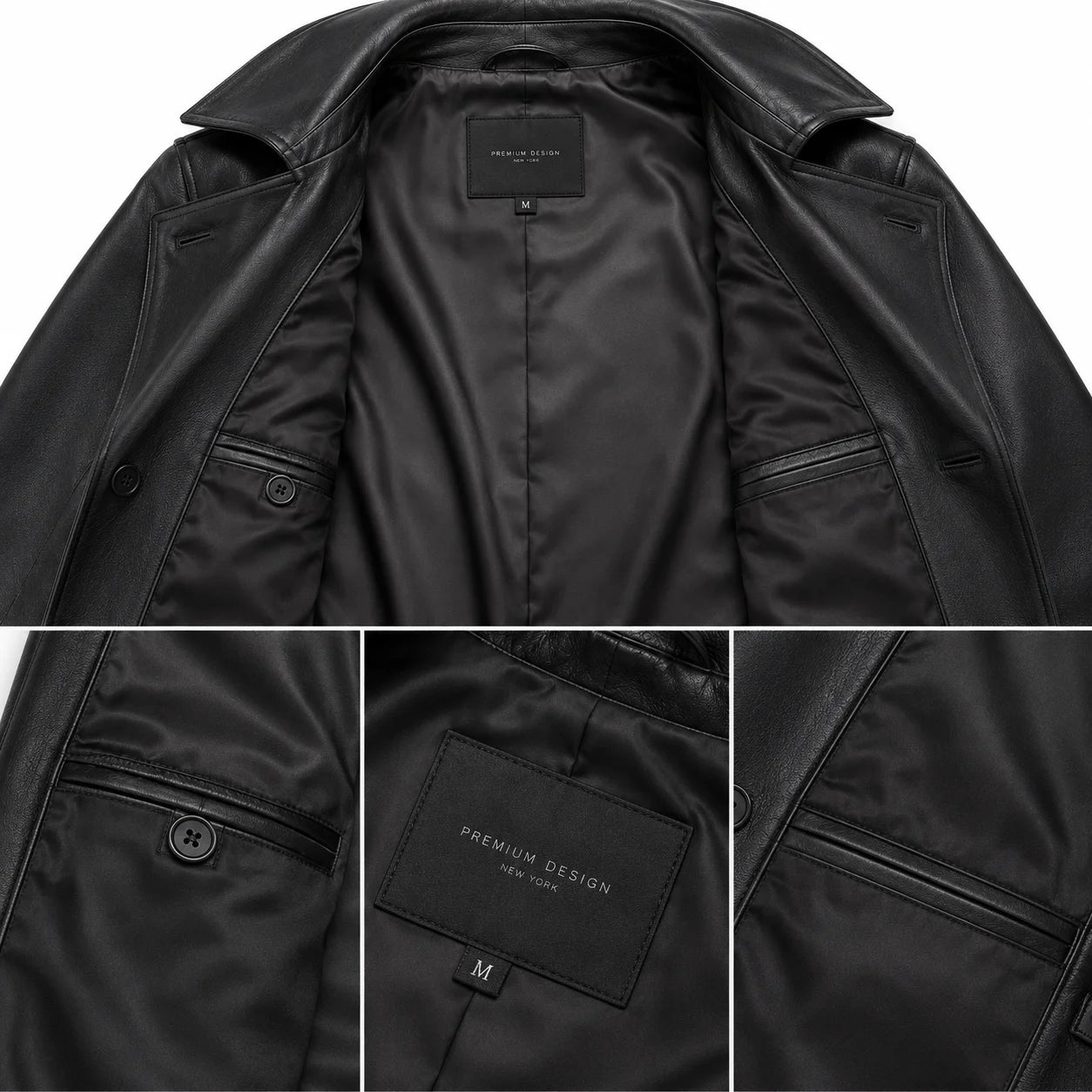
Men's Lambskin Leather Trench Coat: Double-Breasted, Slim-Tailored, Ultra-Soft 0.8mm Hide
Men's Lambskin Leather Trench Coat: Double-Breasted, Slim-Tailored, Ultra-Soft 0.8mm Hide
Couldn't load pickup availability
A men's lambskin leather trench coat is constructed from the hide of young sheep, producing an ultra-soft, fine-grained leather averaging 0.7–0.9mm in thickness. Lambskin is lighter and suppler than cowhide, drapes naturally against the body rather than holding a rigid structure, and responds to tailored silhouettes better than any other leather type.
It is considered the premium hide choice for slim-fit and double-breasted leather outerwear, where drape and second-skin fit matter more than structural rigidity.
There's a moment when you put on a well-made lambskin coat, and it just settles. No stiffness to work through. No break-in period to survive. The 0.8mm hide conforms to your shoulders immediately, falls clean from the lapels, and sits against your chest the way fabric does: except it's leather. Permanent. Unmistakable.
Cowhide builds presence through weight and structure. Lambskin builds presence through drape and precision. They're not competing; they're answering different questions. Cowhide says: I'm wearing leather. Lambskin says: " This coat was made for me.
At 0.8mm, this hide is thinner than the 1.1–1.2mm cowhide used in the rest of this collection. That's not a compromise. It's the specification. Lambskin's fiber structure is denser and more uniform than cowhide at equivalent thickness, which means it holds a slim-tailored silhouette at lower weight without sacrificing durability.
You get the drape of a fine wool overcoat with the surface character of premium leather.
The Leather Hide Comparison: Why Lambskin Is the Premium Choice for Tailored Outerwear
Every leather type makes trade-offs. Here's the full picture across the hides used in serious men's outerwear construction, and for a direct head-to-head, see our full-grain vs. lambskin leather trench coat comparison.
Leather Hide Comparison Table; 8 Dimensions
|
Hide Type |
Thickness Range |
Weight (oz/sqft) |
Softness |
Durability |
Patina Dev. |
Price/sqft |
Break-In |
Best Use Case |
|
Lambskin |
0.6–0.9mm |
2.0–2.8 oz |
★★★★★ |
★★★☆☆ |
Subtle |
$$$ |
None |
Tailored, slim-fit outerwear |
|
Full-Grain Cowhide |
1.1–1.4mm |
3.8–4.8 oz |
|
★★★★★ |
Rich |
$$ |
1–6 months |
Structured, durable outerwear |
|
Top-Grain Cowhide |
0.9–1.2mm |
3.2–4.0 oz |
★★★★☆ |
★★★★☆ |
Moderate |
$$ |
1–3 months |
Mid-range structured outerwear |
|
Goatskin |
0.6–0.9mm |
2.4–3.0 oz |
★★★★☆ |
★★★★☆ |
Moderate |
$$ |
None–1 month |
Lightweight casual outerwear |
|
Pull-Up Oil Tanned |
1.0–1.2mm |
3.6–4.4 oz |
★★★☆☆ |
★★★★☆ |
Very Rich |
$$ |
1–3 months |
Distressed, vintage outerwear |
|
Suede (Split) |
0.6–1.0mm |
2.0–3.0 oz |
★★★★★ |
★★☆☆☆ |
None |
$ |
None |
Casual, warm-climate wear |
|
Bonded Leather |
0.4–0.7mm |
1.6–2.4 oz |
★★☆☆☆ |
★☆☆☆☆ |
None |
$ |
None |
Fashion-only, short lifespan |
The lambskin verdict: Highest softness. Zero break-in. Superior drape for slim-tailored silhouettes. The trade-off is lower durability than full-grain cowhide; lambskin is more susceptible to surface scratching and puncture. But in a long coat worn over clothing rather than used for heavy outdoor work, that trade-off is largely theoretical. This coat is not a tool. It's a garment. Lambskin is correct. (Reference: international leather hide grading standards.)
Construction Specs
Full Material & Build Breakdown
|
Spec |
Detail |
|---|---|
|
Hide Type |
Genuine Lambskin (Sheepskin) |
|
Hide Thickness |
0.8mm |
|
Hide Weight |
2.4 oz / sq ft |
|
Fiber Density |
High: uniform fine grain |
|
Color |
Black |
|
Surface Finish |
Semi-Aniline: natural grain visible |
|
Closure |
Double-Breasted, 6-Button Front |
|
Collar |
Wide Peak Lapel: unlined, drapes naturally |
|
Belt |
Adjustable D-Ring Waist Belt |
|
Lining |
Full Silk-Touch Viscose, Black |
|
Pockets |
2 Slash Exterior + 2 Interior |
|
Length |
Knee-Length (approx. 42–44") |
|
Hardware |
Polished Gunmetal Buttons |
|
Fit |
Classic Slim-Tailored |
|
Sizes |
XS – 3XL |
The semi-aniline surface finish deserves specific attention. Full-aniline lambskin, the most expensive treatment, has zero surface protection, showing every mark immediately. Heavily pigmented lambskin sacrifices the natural grain visibility.
Semi-aniline sits precisely between: the natural grain of the hide remains fully visible, a light protective surface coating reduces susceptibility to surface marking, and the softness of the underlying hide is completely uncompromised.
For background on the material, see lambskin leather processing and hide grading and aniline leather finishing classification. For a tailored outerwear piece worn in urban environments, semi-aniline is the intelligent specification.
How Lambskin Drapes and Why It Matters for a Double-Breasted Trench
Double-breasted outerwear is one of the most technically demanding silhouettes to execute in leather. The overlapping front panels, the structured lapels, the shoulder line: each element requires a hide that complies with the tailor's intention rather than fighting it.
Cowhide at 1.2mm holds shape by default. It structures itself. That's a strength in certain silhouettes, but in a double-breasted slim-tailored trench, the lapels need to roll, not stand. The front panels need to lie flat against the body, not project outward. The belt needs to cinch without creating stiff horizontal creases across the waist.
Lambskin at 0.8mm does all of that without instruction. The lapels roll to the button line naturally. The front panels conform to the chest. The belt draws in the waist without buckling the hide on either side.
The result is a coat that looks like it was fitted because the hide cooperated with the silhouette rather than needing to be forced into it.
This is why lambskin is the standard hide choice for slim-fit leather jackets at every price point, from $800 heritage brands to luxury fashion houses. The physics are consistent regardless of price.
Styling a Men's Black Lambskin Leather Trench Coat
Lambskin's drape makes it the most versatile hide in the collection for outfit pairings. The slim silhouette reads across formality levels without adjustment. See our complete guide to wearing a leather trench coat in 2026 for more pairing strategies.
Elevated Formal
Black lambskin trench over a black or charcoal slim suit. No pocket square. No tie. Let the coat and suit work as a monochromatic column. This is the look that reads as fashion-aware rather than corporate-standard.
The same silhouette language used by creative directors and senior professionals who dress with intent. Polished black Oxford shoes or monk straps.
Sharp Business-Casual
Wear it over a fine-gauge turtleneck in grey, ivory, or camel and tailored slim trousers. The lambskin surface reflects light slightly differently from cowhide; it has a subtle, refined sheen that reads premium in professional contexts. Black or dark brown Chelsea boots.
Dressed-Down Premium
Over a heavyweight white or black crewneck and dark slim jeans. The slim-tailored lambskin trench elevates a simple two-piece base into something with clear visual intention. The coat does the work. Keep the rest minimal. White leather sneakers or clean black leather boots.
Evening
The slim silhouette and polished gunmetal hardware make this the strongest coat in the collection for evening contexts: restaurants, events, and gallery openings. Layer over a black shirt and dark trousers. Wear closed and belted.
The lambskin surface under low light has a depth that cowhide and oil-tanned hides don't replicate.
Lambskin vs. Cowhide: Choosing the Right Hide for Your Trench
This is the core decision for buyers comparing this coat against the black or brown full-grain cowhide trenches in the collection.
|
Lambskin (This Coat) |
Full-Grain Cowhide |
|
|---|---|---|
|
Softness on day one |
Immediate: zero break-in |
Firm, 1–6-month break-in |
|
Drape quality |
Excellent: flows with body movement |
Structured: holds independent shape |
|
Weight |
Light, 2.4 oz/sqft |
Substantial, 4.2 oz/sqft |
|
Durability |
Moderate: more susceptible to surface scuffs |
High: resists abrasion and puncture |
|
Patina development |
Subtle: ages gracefully, less dramatically |
Rich: develops strong, visible character |
|
Best for |
Tailored, slim, formal-to-evening contexts |
Daily wear, structured outerwear, cold climates |
|
Price premium |
Higher: lambskin costs more per sqft |
Lower: cowhide is more widely available |
|
Longevity |
10–20 years with proper care |
20–30 years with proper care |
The honest answer: If you want one leather trench that lasts 25 years, takes hard use, and builds a character that gets richer decade by decade. Buy our men's black leather trench coat in full-grain cowhide at $299.
If you want the finest-feeling coat in the collection, the one that looks most considered in formal and evening contexts, and the silhouette that performs best in premium slim-tailored construction: this is it.
Fit Guide: Lambskin's Slim-Tailored Logic
The slim-tailored cut on this coat is built around lambskin's drape properties. It sits closer to the body than the classic trenches, intentionally. The hide does not add visual bulk the way cowhide does, so the silhouette can afford to be more precise.
- Slim builds: True to size. The slim-tailored cut is calibrated for this frame. The lambskin drapes cleanly without excess fabric pooling at the waist.
- Athletic builds: Size up one. The chest and shoulder panel requires clearance; lambskin does not stretch, and a coat that pulls across the chest looks wrong immediately. Use the belt to compensate at the waist.
- Broader frames: Size up one to two. The slim-tailored silhouette is less forgiving on broader frames than the relaxed or structured fits of the other coats in the collection; size accurately and consider wearing open.
Lambskin cannot be altered by most leather repair shops; the hide is thinner than cowhide and more sensitive to re-stitching. Get the shoulder fit right on the first order. Full size chart on the listing.
Lambskin Care; Precision Maintenance for Premium Hide
Lambskin requires more attentive care than cowhide. The thinner hide and semi-aniline finish are more responsive to both neglect and incorrect products. For general principles, see our leather trench coat care guide; though lambskin needs the lambskin-specific adjustments below.
Routine Care:
- Condition every 4 months: more frequently than cowhide. Use a lambskin-specific conditioner or a premium colorless cream conditioner. Do not use heavy oil-based products; they can darken the surface unevenly.
- Apply a leather protector spray at the start of each season. Lambskin's semi-aniline finish offers moderate surface protection; the spray adds a meaningful additional barrier against moisture and surface marking.
- Buff surface scuffs immediately with a soft, dry cloth using light circular pressure. Minor scuffs on semi-aniline lambskin respond well to gentle buffing; unlike full-aniline, the light surface coating helps the leather recover.
Wet Weather:
-
Avoid heavy rain: lambskin absorbs moisture more readily than cowhide. For light rain, the protective spray provides adequate coverage. In heavy rain, the hide can water-stain if not dried correctly.
-
Dry naturally at room temperature: never near a heat source. Stuff the sleeves loosely with tissue paper to maintain shape while drying.
Storage:
- Wide padded hanger: mandatory. Lambskin at 0.8mm can distort at shoulder stress points on wire or narrow hangers over time. The coat's structure depends on correct support.
- Breathable garment bag; lambskin needs airflow. A sealed plastic bag creates condensation that damages the hide surface over time.
Frequently Asked Questions
What is lambskin leather and why is it considered premium?
What is lambskin leather and why is it considered premium?
Lambskin is leather made from the hide of young sheep, producing an ultra-soft, fine-grained surface averaging 0.7–0.9mm in thickness. It is considered premium because the fine, uniform fiber structure gives it a softness and drape that cowhide cannot match at equivalent thickness. It is the standard hide for high-end slim-fit leather jackets and tailored outerwear across luxury and heritage fashion brands.
How do I know if lambskin or cowhide is right for me?
How do I know if lambskin or cowhide is right for me?
Choose lambskin if you want immediate softness, a slim tailored silhouette, and a coat that performs equally in formal, business, and evening contexts. Choose cowhide if you want maximum durability, a coat that builds significant visible character over decades, and a hide that handles daily wear without special handling. Both are correct, for different buyers.
Is the $449 price justified for lambskin versus the $299 cowhide trench?
Is the $449 price justified for lambskin versus the $299 cowhide trench?
The $150 premium reflects three things: lambskin costs more per square foot than cowhide; the slim-tailored construction requires greater pattern precision with less material tolerance; and the semi-aniline finishing process is more labor-intensive than standard surface dyeing. If your priority is durability and long-term value, the full-grain cowhide at $299 is the rational choice. If your priority is softness, drape, and formal-to-evening versatility, the lambskin at $449 is worth the premium.
Can lambskin leather be repaired if it tears or scuffs?
Can lambskin leather be repaired if it tears or scuffs?
Surface scuffs on semi-aniline lambskin respond well to gentle buffing and conditioning. Deeper scratches can be addressed with a leather repair kit matched to the hide color. Tears or structural damage should go to a specialist in leather garment repair; lambskin's thin hide requires precision work that general tailors or shoe repair shops may not provide. Identify a leather specialist in your area before the coat needs it.
How does a lambskin leather trench coat feel compared to cowhide?
How does a lambskin leather trench coat feel compared to cowhide?
Significantly softer and lighter. Cowhide at 1.2mm has a firm, substantial hand; you feel the weight and structure immediately. Lambskin at 0.8mm feels closer to a heavy premium fabric than traditional leather. It moves with the body rather than independently of it. For buyers who find cowhide too stiff or heavy, lambskin resolves both issues simultaneously.
Does lambskin leather require a break-in period?
Does lambskin leather require a break-in period?
No. This is lambskin's most significant practical advantage over cowhide. The hide is soft, supple, and conforming from day one. There is no stiffness to work through, no period of discomfort, and no waiting for the coat to fit correctly. It performs at its peak immediately.
Is lambskin more durable than cowhide?
Is lambskin more durable than cowhide?
No, cowhide is more durable. Lambskin's thinner hide is more susceptible to surface scratching and puncture than 1.2mm full-grain cowhide. However, in a tailored outerwear context, worn over clothing rather than used for heavy outdoor work, lambskin's durability is entirely adequate. A well-maintained lambskin coat lasts 10–20 years. A well-maintained full-grain cowhide coat lasts 20–30 years.
The $449 Positioning; Where Lambskin Sits in the Premium Leather Market
Lambskin leather at retail from heritage and luxury fashion brands starts at $800 and runs into several thousand dollars for a full-length coat. The hide cost, the construction precision required, and the brand margin account for the difference. At $449, this coat is positioned at the entry point of serious lambskin outerwear; the price at which real 0.8mm sheepskin and genuine slim-tailored construction become accessible without the brand markup of luxury fashion labels. The material is the same. The tanning standards are the same. The construction specifications: 0.8mm semi-aniline lambskin, precision slim-tailored pattern, silk-touch viscose lining, polished gunmetal hardware; hold up against coats retailing at double and triple this price. What you're not paying for is a logo. What you are paying for is a coat built to last 15–20 years, in the finest hide in the collection, at the silhouette that performs best in the contexts where how you dress actually matters.
For a more rugged everyday alternative, see our men's distressed leather trench coat, or browse the men's brown leather trench coat for classic full-grain warmth.
Share